The challenges towards clean energy
The world is shifting from fossil fuels to renewable energy, driven by electrification. With heating of space and water representing circa 78% of the final energy consumed by households, heat pumps are positioned as a leading solution for clean domestic heating.
Global deployment of heat pumps will increase strain on the grid which is already failing with blackouts in Europe.
Heat pumps are not being installed to operate at maximum efficiency due to subjective surveys, incorrect system design, poor installation and a complete lack of accurate real time data at the outset of the deployment process.
This highlights two clear challenges:
Grid strain : The Spark Gap
Deployment : The Skills Gap
RESOLVING THE SPARK GAP
Reduces energy consumption.
Reduces carbon emissions.
Reduces consumer heating cost.
Reduces consumer heating cost.
Provides accurate grid loading data for VPPs
Technology verification January 2026 – Queens University Belfast
- Hardware and software completed.
- Software verified using Matter protocol.
- Working system tested and outputs verified.
- System installed into a home.
- Field testing underway into 10-100 homes.
- Development of valve to pre-production specification under process in AMIC Factory of The Future.
- Develop advanced and carbon efficient manufacturing techniques and production line blueprint.

SMART TRV
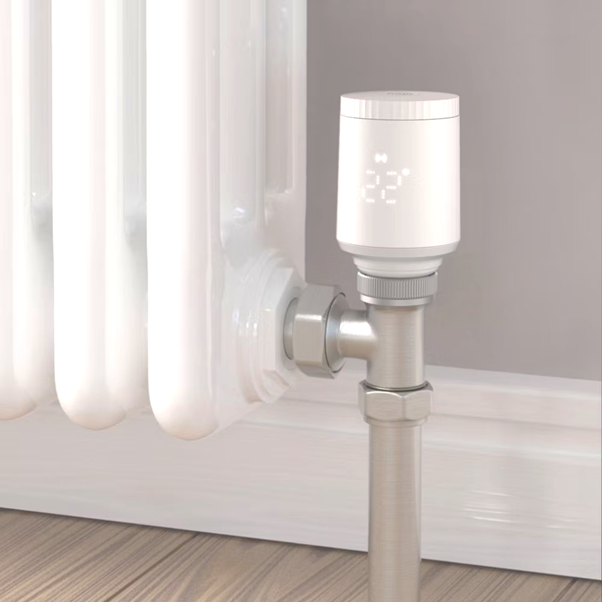
- The world’s first thermostatic radiator valve or TRV was developed in 1943.
- A TRV head acting upon a pin in the valve body has remained largely unchanged in its design and function used in smart TRVs today.
- The smart valve head opens and closes the valve based upon ambient room temperature (air temperature)
- The smart valves do not monitor the flow rate of the water.
- The smart valves do not monitor the temperature of the water.
- Smart valves are unable to read turbulent water flow moving through an L shaped body.
Mi-Engineer
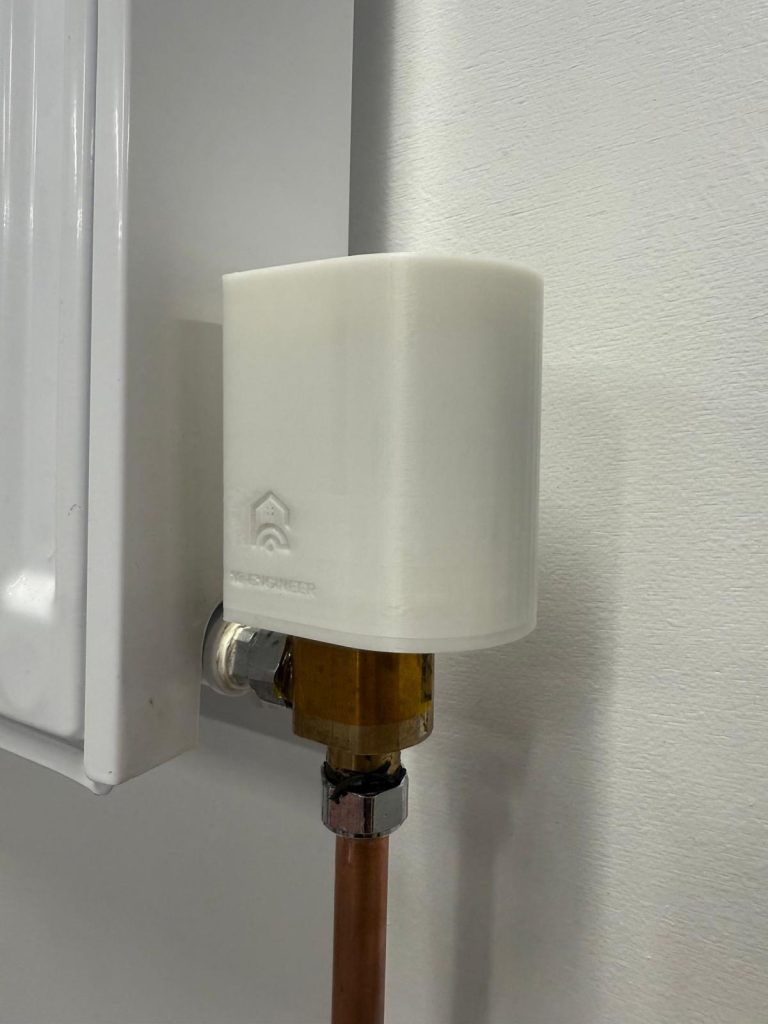
- Cosmetically the same as a smart TRV, but not a TRV due to entirely new engineering inside the valve head and body.
- Valve directly monitors the temperature of the water.
- Valve operates using direct water temperature. (not ambient air)
- Valve able to read turbulent water flow through an L shaped body.
- Valve constantly monitors and controls flow rate and temperature.
- Valve reports live data to dashboard.
- Valve auto-reports faults.
The Transition to Dynamic Empirical Thermodynamics
The traditional model of residential heat transfer has long relied on a static variable known as the radiator exponent.
This value, typically standardised at 1.3, is a laboratory-derived approximation that fails to account for the stochastic variables of real-world environments.
Our technology introduces a paradigm shift into Dynamic Empirical Thermodynamics. We have successfully developed a method to derive the exact “Material Exponent” of a thermal system in real-time.
This system moves beyond the theoretical by measuring the exact interaction between hydronic mass flow, differential temperatures and localised atmospheric conditions.
By transforming the “Material Exponent” from a guessed constant into a measurable variable, our technology represents the greatest advancement in hydronic control logic since the invention of the thermostatic valve in 1943.